Descriptions
CRUISE CONTROL
Engines: 2.0 16V, 2.0 JTD 8V, 2.3 JTD 16V, 2.8 JTD 8V
OPERATION
- Systems for the control of petrol engines with motorised throttle and diesel engines with electronic control of injection time offer Cruise Control as a function, i.e. a system that automatically maintains a cruising speed set by the driver.
- The electronically controlled Cruise Control system makes it possible to drive the vehicle at the desired speed without pressing the accelerator pedal. This makes driving on motorways less tiring, especially on long journies, because the speed memorized is maintained automatically.
- The electronic system is managed by the injection control unit. It automatically maintains the cruising speed set by the user and this is implemented by means of a control on the motorized throttle.
- The Cruise Control system may be fitted on vehicles with either manual or automatic transmission connected to the engine management system at the CAN.
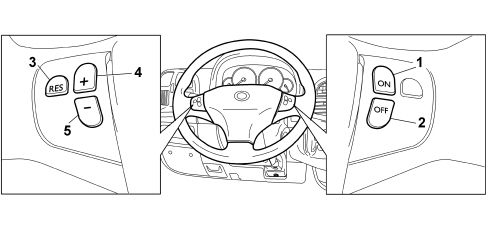
- The speed regulator is controlled by a series of buttons on the steering wheel.
- The location of the Cruise Control system control is illustrated in the diagram.
MEMORIZING THE PRESELECTED SPEED
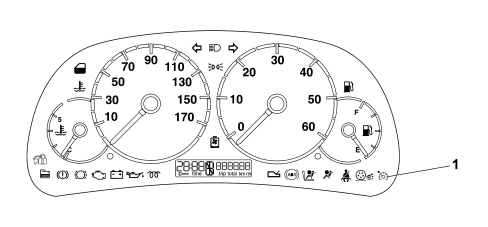
- To activate the operation of the Cruise Control:*- press button 1 and let the vehicle reach the desired speed normally.*- let the vehicle reach the desired speed; it should be remembered that the Cruise Control can only be activated for speeds above 40 km/h. It is advisable to engage it in fourth gear or higher where the road conditions allow the speed set to be maintained safely.*- press button 4 for at least three seconds, then release it. The vehicle speed remains memorized and the accelerator pedal can then be released.*- the green warning light in the instrument panel (NQS) should come on constantly with the signal coming from the engine management control unit (NCM), via the CAN, indicating the Cruise Control operating status. The warning light going out indicates that the system is deactivated.